A standard planning rule for events sizes restroom units by guest count and hours: about 1 unit per 50 guests for a 3-4 hour event, with an added unit per 50 once alcohol is served or the event runs past 5 hours. A…
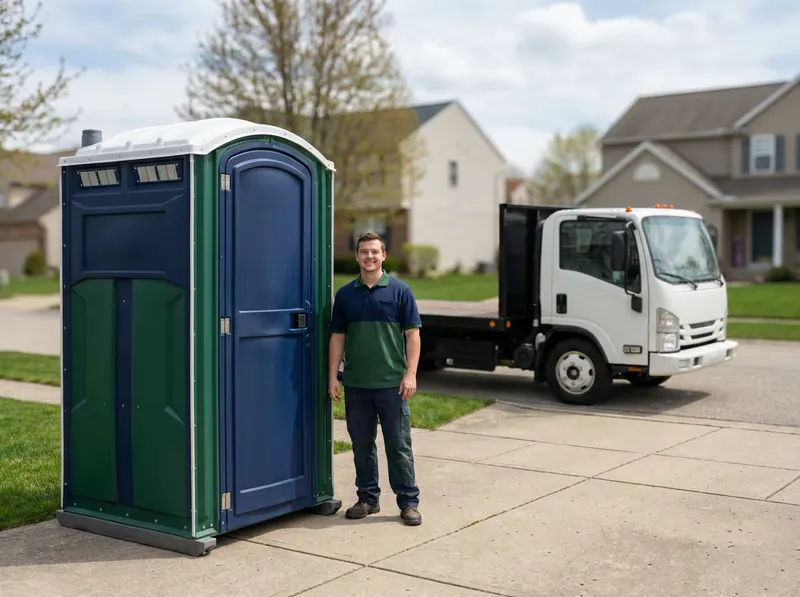
A standard planning rule for events sizes restroom units by guest count and hours: about 1 unit per 50 guests for a 3-4 hour event, with an added unit per 50 once alcohol is served or the event runs past 5 hours. A 150-guest wedding reception in Tremont or a backyard party in Old Brooklyn typically needs 3-4 standard units, while a 500-attendee festival near Edgewater Park or a race staging area at the Cuyahoga River flats scales into the double digits. Deluxe flushing units, which include a foot-pump flush, an interior sink, and a mirror, are the common upgrade for weddings and catered receptions in Ohio City and University Circle where guests are dressed up.
The unit set includes standard non-flushing units, deluxe flushing units, ADA-accessible units, and hand-wash stations. ADA units measure roughly 60 inches wide inside with a ground-level entry, sized for wheelchair access, and Cuyahoga County event sites with public attendance generally plan at least one. Hand-wash stations pair with food-service events: a station holds fresh-water tanks feeding two to four spigots. For a small block party in Collinwood or Kamm's Corners, one or two standard units usually clears the $250 minimum; for a full-day festival in Detroit-Shoreway, a mix of deluxe, ADA, and hand-wash units is the fit.
Events that run longer than one day or draw heavy traffic get scheduled mid-event servicing, where a driver pumps the tank and restocks paper and sanitizer between sessions rather than a single drop-and-leave. If the event is a single afternoon gathering in Slavic Village or Buckeye-Shaker, a drop-off before and pickup after covers it; if it is a two-day festival or a weekend tournament in Glenville, mid-event servicing keeps units usable through the second day. The trade-off is servicing frequency against cost, more service visits raise the total, and fewer visits risk full units at peak hours.
Booking runs in four steps. First, the guest count, hours, and whether alcohol or food is served set the unit count. Second, the placement spot is confirmed, units need firm, level ground within reach of a delivery truck, and a flat 8-by-8-foot pad per unit. Third, a delivery window is scheduled, usually the day before or the event morning. Fourth, units are hauled after the event, with all waste pumped and removed. Placement on soft grass, hillside lots, or spots blocked by tents should be flagged before delivery so the truck can reach the pad. Street placement on some Cleveland roads may require a right-of-way permit from the city, which is confirmed during booking.
Every job gets a firm, written price after a free on-site visit.
Tell us about your event portable toilet rental job in Cleveland and we'll send a clear, written quote, usually the same day.
 Cuyahoga Portable Toilet Rental