An ADA-compliant unit differs from a standard portable toilet in footprint and interior layout. A standard construction toilet has a roughly 40-inch square floor; an ADA unit measures closer to 5 feet square inside so…
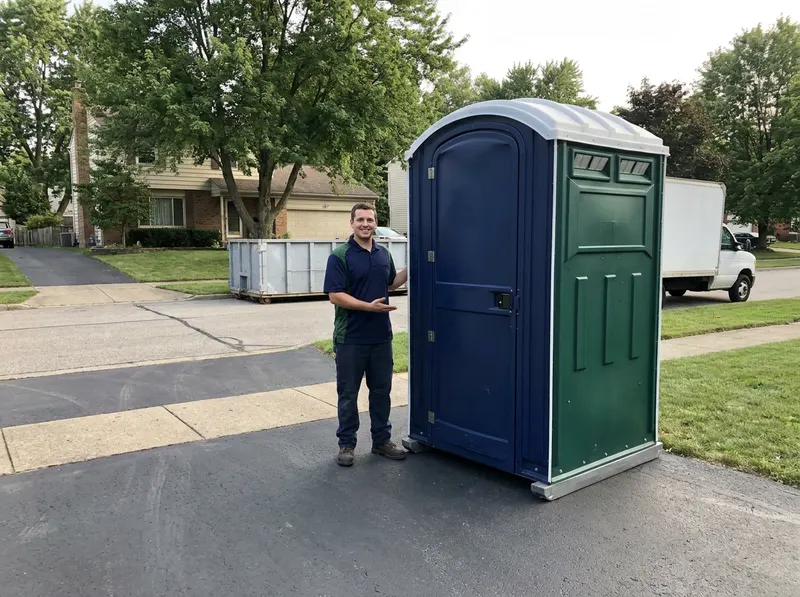
An ADA-compliant unit differs from a standard portable toilet in footprint and interior layout. A standard construction toilet has a roughly 40-inch square floor; an ADA unit measures closer to 5 feet square inside so a wheelchair can complete a full 60-inch turn without contacting the walls. The entry sits flush with the ground rather than on a raised step, and grab bars run along the interior walls at a fixed height. That extra floor space is the reason ADA placement needs a wider, level footprint on the delivery site.
Decision-fit comes down to the crowd and the ground. A public event at Edgewater Park, a festival on West 25th in Ohio City, or a University Circle gathering that serves the general public falls under ADA guidance, which recommends roughly one accessible unit for every 20 standard units on site; a single wheelchair-accessible restroom covers most small-to-mid Cleveland events. A private backyard party in Old Brooklyn or Kamm's Corners with no accessibility need can use a standard unit and reserve budget. If a job site in the Cuyahoga River flats or a Slavic Village build hosts a worker who uses a wheelchair, the ADA unit satisfies both the accessibility need and OSHA's requirement for on-site sanitation. The trade-off is straightforward: the ADA unit costs more and takes more space than a standard toilet, and in exchange it serves every guest or crew member without a barrier.
Placement across Cleveland's older neighborhoods has physical limits worth planning around. Tremont and Detroit-Shoreway streets are narrow with tight curb cuts, and Collinwood and Glenville lots can pitch several inches; an ADA unit must sit on firm, level ground so the flush entry stays a true zero-step threshold. On sloped or soft ground, plywood or a leveled pad keeps the door self-closing and the interior stable. Delivery trucks need clear vehicle access to within a short carry distance of the final spot, so gated University Circle courtyards or fenced Buckeye-Shaker yards should have an open gate confirmed before the delivery window.
Booking runs in three plain steps. First, a call to (216) 682-2776 confirms the unit count, the neighborhood, the placement surface, and the rental length. Second, a delivery window is scheduled, most often 24 to 48 hours out, with same-day placement available on weekdays. Third, for rentals longer than a week, servicing is scheduled on a set interval to pump the tank and restock paper and sanitizer, and pickup is arranged for the end of the term. The quote is a ballpark until the site is confirmed; the exact price is set on a free on-site check of access and ground conditions.
Every job gets a firm, written price after a free on-site visit.
Tell us about your ada-compliant portable toilet rental job in Cleveland and we'll send a clear, written quote, usually the same day.
 Cuyahoga Portable Toilet Rental